
第十四届蓝桥杯JavaA组省赛真题 - 互质数的个数
·
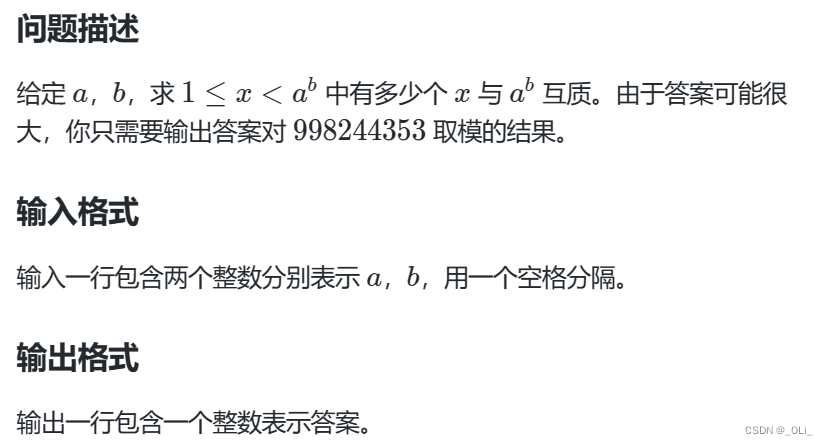
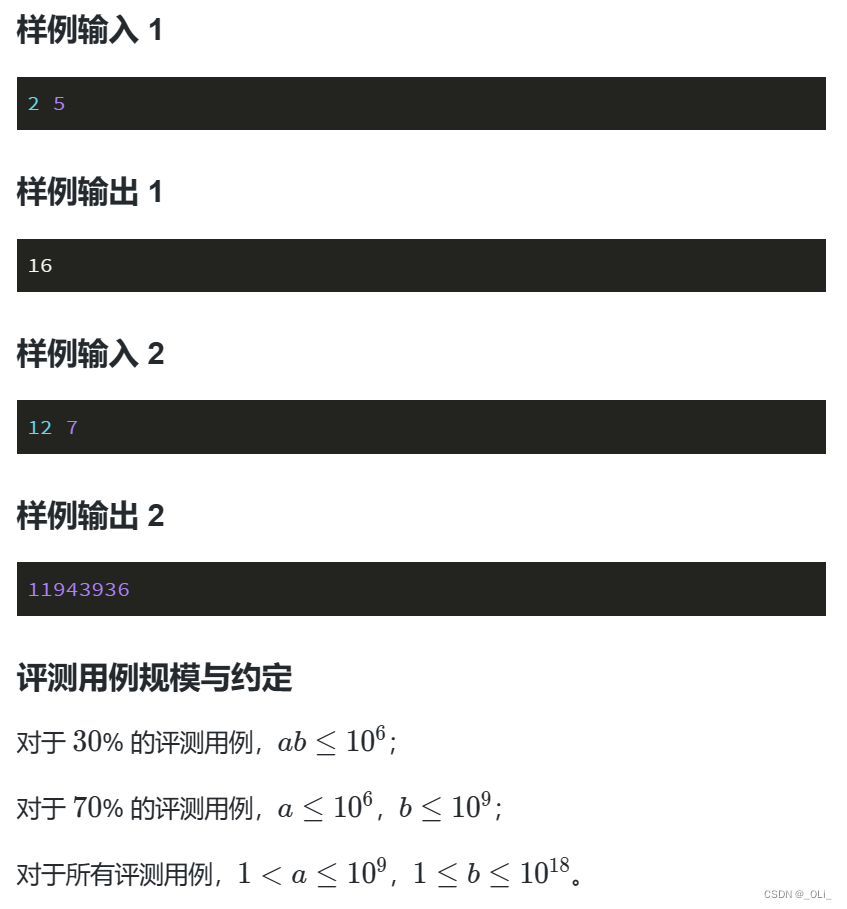
解题思路:
快速幂 + 欧拉函数
快速幂比较常见于数据较大的取模场景,欧拉函数感觉还是有点抽象
注意:
取模的时候就不要简写了,例如:res = res * a % mod;不要写成res *= a % mod;
import java.util.Scanner;

public class Main {
    static int mod = 998244353;

    public static void main(String[] args) {
        Scanner sc = new Scanner(System.in);
        long a = sc.nextLong();
        long b = sc.nextLong();
        // 如果a等于1,则直接输出0,因为任何数的0次方都是1
        if (a == 1) System.out.println(0);
        // 初始化结果res为a
        long res = a, x = a;

        // 循环,从2开始到x的平方根,检查x的因子
        for (int i = 2; i <= Math.sqrt(x); i++) {
            // 如果i是x的因子
            if (x % i == 0) {
                // 不断除以i,直到x不能被i整除
                while (x % i == 0) x /= i;
                // 根据欧拉定理,将res中所有i的因子替换为i-1
                res = res / i * (i - 1);
            }
        }
        // 如果x还有大于1的因子,重复上述操作
        if (x > 1) res = res / x * (x - 1);

        // 输出结果,为res乘以a的b-1次方,并对mod取模
        System.out.println(res * qmi(a, b - 1) % mod);
    }

    // 快速幂运算方法,用于计算a的b次方模mod的值
    private static long qmi(long a, long b) {
        long res = 1;
        while (b > 0) {
            if ((b % 2) == 1) res = res * a % mod;
            a = a * a % mod;
            b /= 2;
        }
        return res % mod;
    }
}
更多推荐


 4
 0
- 0


 已为社区贡献7条内容

所有评论(0)