
非对称加密算法--RSA
·
一、概念
非对称加密有一对密钥:公钥 (publickey) 和私钥 (privatekey),因为加密和解密用的是不同的密钥,所以称为非对称加密。
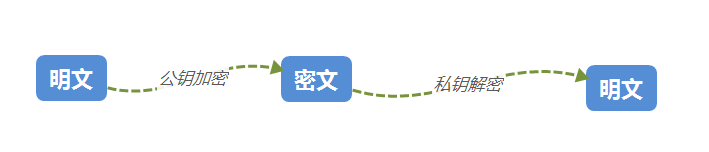
公钥加密,私钥解密
私钥加密,公钥解密
二、特点
- 相对于对称加密,加密速度慢,效率低
- 相对于对此加密,安全性更高
- 适合加密少量数据
三、非对称加密算法
- RSA(最常用)
- ECC
- Diffie-Hellman
- DSA
四、应用场景
4.1、信息加密
4.2、数字签名
私钥加密,公钥解密;
私钥只有一份,只要不泄露私钥,防止签名被伪造。
对哈希值进行加密可以提高效率
针对A端,进行数字签名过程:
1、A端生成密钥对,将公钥分发给B;
2、A端先将要加密数据,通过哈希算法生成hash值;
3、A端通过私钥对hash值进行加密,生成签名密文;
4、A端发送(原始数据+数字签名)给B端;
针对B端,进行签名校验过程:
1、B端获取到A端发送数据,将原始数据通过相同哈希算法生成hash值hashA;
2、B端通过公钥对签名进行解密,得到hashB;
3、比较hashA与hashB值,相同则数据没有被伪造;
4.3、数字证书
针对密钥分发,存在安全隐患,需要保证获取公钥是真实。
这样就需要第三方机构来保证公钥的合法性,这个第三方机构就是 CA (Certificate Authority),证书中心。
CA 用自己的私钥对信息原文所有者发布的公钥和相关信息进行加密,得出的内容就是数字证书。
信息原文的所有者以后发布信息时,除了带上自己的签名,还带上数字证书,就可以保证信息不被篡改了。信息的接收者先用 CA给的公钥解出信息所有者的公钥,这样可以保证信息所有者的
五、项目实战
package com.spring.util;

import sun.misc.BASE64Decoder;
import sun.misc.BASE64Encoder;

import javax.crypto.Cipher;
import java.io.File;
import java.io.IOException;
import java.security.*;
import java.security.spec.InvalidKeySpecException;
import java.security.spec.PKCS8EncodedKeySpec;
import java.security.spec.X509EncodedKeySpec;

/**
 * RSA 非对称加密工具类
 *
 * @author yilei
 * @className RsaUtils
 * @date 2021/1/30 15:39
 **/
public class RsaUtils {

    /**
     * 算法名称
     */
    private static final String ALGORITHM = "RSA";

    /**
     * 密钥长度
     */
    private static final int KEY_SIZE = 2048;

    /**
     * 密钥对生成器
     *
     * @param
     * @return void
     * @author yilei
     * @date 2021-01-30 15:39
     */
    public static KeyPair generateKeyPair() throws NoSuchAlgorithmException, IOException {
        // 获取指定算法的密钥对生成器
        KeyPairGenerator gen = KeyPairGenerator.getInstance(ALGORITHM);
        // 初始化密钥对生成器(指定密钥长度, 使用默认的安全随机数源)
        gen.initialize(KEY_SIZE);
        // 随机生成一对密钥(包含公钥和私钥)
        KeyPair keyPair = gen.generateKeyPair();
        return keyPair;
    }

    /**
     * 将 公钥/私钥 编码后以 Base64 的格式保存到指定文件
     *
     * @param key     公钥/私钥
     * @param fileUrl 文件路径
     * @return void
     * @author yilei
     * @date 2021/1/30 16:19
     */
    public static void saveToFile(Key key, String fileUrl) throws IOException {
        // 获取密钥编码后的格式
        byte[] encBytes = key.getEncoded();
        // 转换为 Base64 文本
        String encBase64 = new BASE64Encoder().encode(encBytes);
        // 保存到文件
        IOUtils.writeFile(encBase64, new File(fileUrl));
    }

    /**
     * 根据公钥的 Base64 文本创建公钥对象
     *
     * @param
     * @return void
     * @author yilei
     * @date 2021/1/30 15:52
     */
    public static PublicKey getPublicKey(String pubKeyBase64) throws IOException, NoSuchAlgorithmException, InvalidKeySpecException {
        // 把 公钥的Base64文本 转换为已编码的 公钥bytes
        byte[] encPubKey = new BASE64Decoder().decodeBuffer(pubKeyBase64);
        // 创建 已编码的公钥规格
        X509EncodedKeySpec encPubKeySpec = new X509EncodedKeySpec(encPubKey);
        // 获取指定算法的密钥工厂, 根据 已编码的公钥规格, 生成公钥对象
        return KeyFactory.getInstance(ALGORITHM).generatePublic(encPubKeySpec);
    }

    /**
     * 根据私钥的 Base64 文本创建私钥对象
     *
     * @param
     * @return void
     * @author yilei
     * @date 2021/1/30 15:52
     */
    public static PrivateKey getPrivateKey(String priKeyBase64) throws IOException, NoSuchAlgorithmException, InvalidKeySpecException {
        // 把 私钥的Base64文本 转换为已编码的 私钥bytes
        byte[] encPriKey = new BASE64Decoder().decodeBuffer(priKeyBase64);
        // 创建 已编码的私钥规格
        PKCS8EncodedKeySpec encPriKeySpec = new PKCS8EncodedKeySpec(encPriKey);
        // 获取指定算法的密钥工厂, 根据 已编码的私钥规格, 生成私钥对象
        return KeyFactory.getInstance(ALGORITHM).generatePrivate(encPriKeySpec);
    }

    /**
     * 公钥加密数据
     *
     * @param plainData 明文
     * @param pubKey    公钥
     * @return byte[]
     * @author yilei
     * @date 2021/1/30 16:22
     */
    public static byte[] encryptPublic(byte[] plainData, PublicKey pubKey) throws Exception {
        // 获取指定算法的密码器
        Cipher cipher = Cipher.getInstance(ALGORITHM);
        // 初始化密码器(公钥加密模型)
        cipher.init(Cipher.ENCRYPT_MODE, pubKey);
        // 加密数据, 返回加密后的密文
        return cipher.doFinal(plainData);
    }

    /**
     * 私钥解密数据
     *
     * @param cipherData 密文
     * @param priKey     私钥
     * @return byte[]
     * @author yilei
     * @date 2021/1/30 16:24
     */
    public static byte[] decryptPrivate(byte[] cipherData, PrivateKey priKey) throws Exception {
        // 获取指定算法的密码器
        Cipher cipher = Cipher.getInstance(ALGORITHM);
        // 初始化密码器(私钥解密模型)
        cipher.init(Cipher.DECRYPT_MODE, priKey);
        // 解密数据, 返回解密后的明文
        return cipher.doFinal(cipherData);
    }

    /**
     * 公钥解密数据
     *
     * @param cipherData 密文
     * @param pubKey     公钥
     * @return byte[]
     * @author yilei
     * @date 2021/1/30 16:24
     */
    public static byte[] decryptPublic(byte[] cipherData, PublicKey pubKey) throws Exception {
        // 获取指定算法的密码器
        Cipher cipher = Cipher.getInstance(ALGORITHM);
        // 初始化密码器(私钥解密模型)
        cipher.init(Cipher.DECRYPT_MODE, pubKey);
        // 解密数据, 返回解密后的明文
        return cipher.doFinal(cipherData);
    }

    /**
     * 私钥加密数据
     *
     * @param plainData 明文
     * @param priKey    私钥
     * @return byte[]
     * @author yilei
     * @date 2021/1/30 16:22
     */
    public static byte[] encryptPrivate(byte[] plainData, PrivateKey priKey) throws Exception {
        // 获取指定算法的密码器
        Cipher cipher = Cipher.getInstance(ALGORITHM);
        // 初始化密码器(私钥加密模型)
        cipher.init(Cipher.ENCRYPT_MODE, priKey);
        // 加密数据, 返回加密后的密文
        return cipher.doFinal(plainData);
    }

    public static void main(String[] args) throws Exception {
        // 密钥对生成器
        KeyPair keyPair = generateKeyPair();
        // 公钥
        PublicKey pubKey = keyPair.getPublic();
        // 私钥
        PrivateKey priKey = keyPair.getPrivate();

        System.out.println("=============公钥加密,私钥解密(适用与客户端-服务器端模式)=================");
        // 明文
        String data = "RSA 非对称加密===公钥加密,私钥解密";
        System.out.println("明文:" + data);
        // 客户端: 用公钥加明文, 返回加密后的数据
        byte[] cipherData = encryptPublic(data.getBytes(), pubKey);
        // 服务端: 用私钥解密数据, 返回原文
        byte[] plainData = decryptPrivate(cipherData, priKey);
        // 输出查看解密后的原文
        System.out.println("私钥解密后:" + new String(plainData));

        System.out.println("");
        System.out.println("=============私钥加密,公钥解密(适用于签名验签授权模式)=================");
        // 明文
        String data1 = "RSA 非对称加密=====私钥加密,公钥解密";
        System.out.println("明文:" + data1);
        // 授权服务端: 用私钥加密明文, 返回加密后的数据
        byte[] cipherData1 = encryptPublic(data1.getBytes(), pubKey);
        // 被授权的服务端: 用公钥解密数据, 返回原文
        byte[] plainData1 = decryptPrivate(cipherData1, priKey);
        // 输出查看解密后的原文
        System.out.println("公钥解密后:" + new String(plainData1));

    }
}
更多推荐



 0
0 0
0- 0


 已为社区贡献3条内容

所有评论(0)